



A route that connects some of the most representative landscapes of the Guadalhorce Valley. Quiet roads, whitewashed villages, long climbs and a varied ride that combines history, nature and authentic inland cycling. The perfect route to discover a different side of Málaga Province.
The route starts in Alhaurín de la Torre and quickly heads towards the heart of the Guadalhorce Valley. After passing through Cártama and Pizarra, the road begins to climb on the way to Casarabonela, one of the most spectacular white villages in the region and a gateway to the Sierra de las Nieves.
From there, the road continues to gain elevation gradually towards Alozaina, crossing a mid-mountain landscape surrounded by pine forests, olive groves and wide-open views over the Málaga countryside. This is one of the quietest and most enjoyable sections of the entire route, perfect for taking in the scenery while maintaining a steady pace.
The return leg passes through Coín and Alhaurín el Grande, two towns historically linked to the valley’s agricultural heritage. From here, the route flows along wider, faster roads before returning to Alhaurín de la Torre.
The Guadalhorce Valley has historically been one of Andalusia’s most important agricultural regions thanks to the fertility of its land and the constant presence of the river that gives the area its name. For centuries, this natural corridor has served as a vital link between the Spanish interior and the Mediterranean coast.
Casarabonela preserves a significant Andalusian heritage and occupies a privileged position on the lower slopes of the Sierra de las Nieves. Its narrow, steep streets reflect the town’s Moorish origins, while its surrounding landscape has traditionally been shaped by agriculture and livestock farming.
Alozaina forms part of the Sierra de las Nieves region and maintains a strong connection with the pine and holm oak forests that surround the village. Meanwhile, Coín and Alhaurín el Grande have been important agricultural and commercial centres of the valley for centuries, playing a key role in the economic development of Málaga Province.
The cuisine of this area is deeply rooted in local produce and the rural traditions of inland Málaga. Dishes prepared with extra virgin olive oil, seasonal vegetables and ingredients sourced from local farms are a staple of the region.
Among the best-known specialties are sopas hervías, traditional legume stews and mountain-style meat dishes. Olive-based products and artisan cured meats produced throughout the region are also highly popular.
In Coín and Alhaurín el Grande, visitors will also find a wide variety of traditional Andalusian pastries, featuring recipes passed down through generations and made with almonds, honey and olive oil.
The vegetation changes gradually as the route gains altitude. In the valley floor, citrus orchards, olive groves and farmland dominate the landscape, reflecting the agricultural character of the Guadalhorce region.
As the route approaches Casarabonela and Alozaina, extensive Mediterranean pine forests appear alongside holm oaks, carob trees and a wide range of shrub species adapted to the region’s dry climate. Rosemary, thyme, rockrose and broom are among the most common plants, adding colour and fragrance to the landscape throughout much of the year.
In spring, the flowering season transforms the entire area, creating one of the most spectacular times of year to ride these roads. The combination of Mediterranean vegetation, mountains and cultivated fields creates a landscape that perfectly represents the character of inland Málaga Province.
The route passes through a variety of ecosystems that support a rich diversity of wildlife. In the areas closest to the Sierra de las Nieves, it is common to spot birds of prey such as the booted eagle, kestrel and common buzzard.
Pine forests and Mediterranean woodland provide shelter for mammals including foxes, Egyptian mongooses, rabbits and wild boar, particularly in the quieter sections of the route. During the early morning hours, numerous insect-eating birds and small woodland species can also be observed.
The proximity of streams, agricultural land and protected natural areas makes this route an excellent opportunity to experience the wildlife of inland Málaga.
Share this route
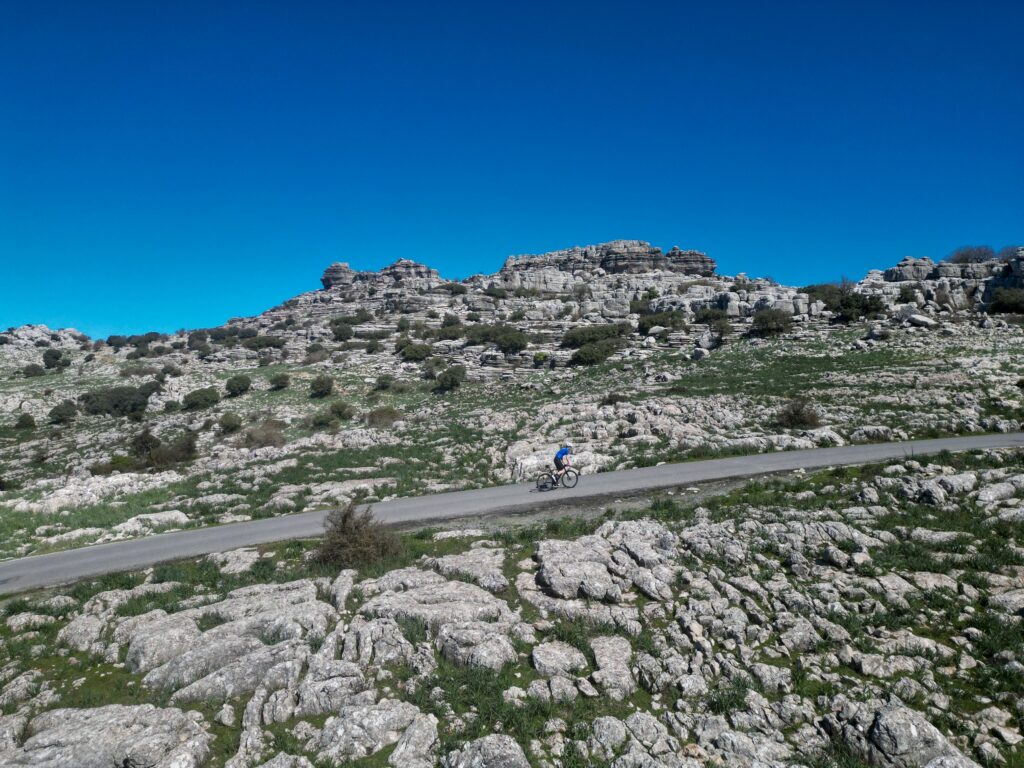
Covering both flat stretches and mountain roads, this circular route from Antequera climbs up to the spectacular El Torcal and explores one of the most unique landscapes in the province. It is a steady and demanding ascent, where the landscape gradually changes until it enters a limestone setting unlike anywhere else in Europe.
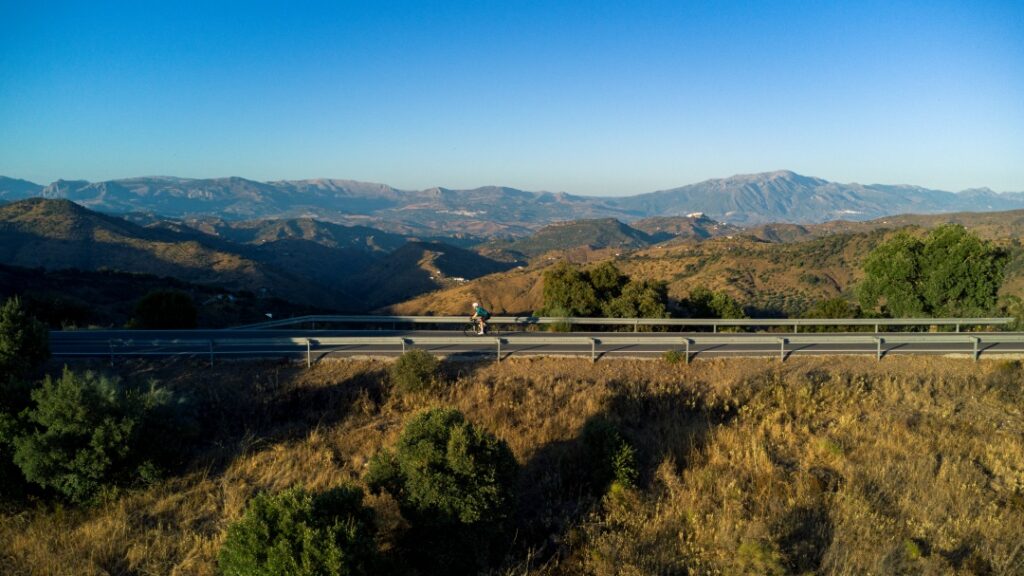
A demanding route that leaves the Mediterranean behind to explore the deepest reaches of the Axarquía. Winding roads, steep gradients and relentlessly rolling terrain connect white villages, vineyards and mountain landscapes. A route through inland Málaga that is as tough as it is spectacular.
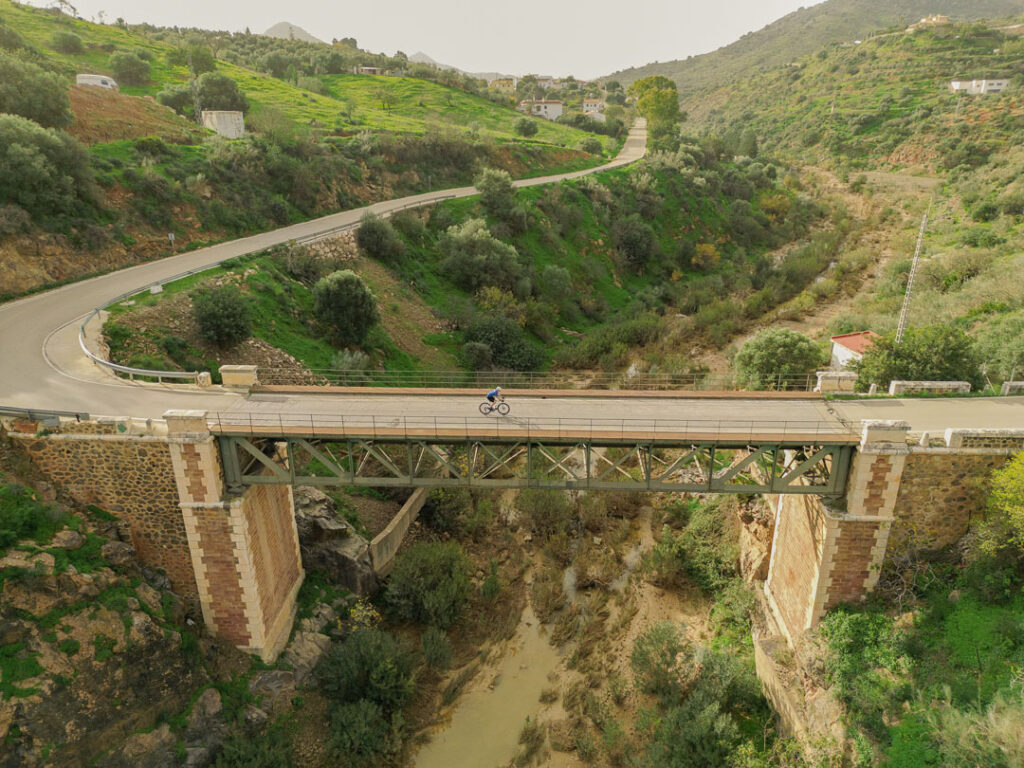
In a few kilometers, the urban noise transforms into open countryside. The gentle hills lead to Almogía and, further on, the landscape becomes more rugged towards Villanueva, where the silhouette of the Torcal looms between olive groves and solitary mountains.
"En Málaga CicloTu utilizamos cookies para que tu experiencia de navegación sea tan fluida como un paseo en bici por el centro de Málaga. Gracias a ellas, podemos optimizar tu recorrido digital, recordar tus preferencias y ofrecerte el mejor servicio. Si decides frenar y no aceptarlas, algunas funciones pueden no estar disponibles. ¿Listo para seguir pedaleando con nosotros?"