



Covering both flat stretches and mountain roads, this circular route from Antequera climbs up to the spectacular El Torcal and explores one of the most unique landscapes in the province. It is a steady and demanding ascent, where the landscape gradually changes until it enters a limestone setting unlike anywhere else in Europe.
The route starts in Antequera, one of the most historic towns in the province,
and soon leaves the flatter roads behind to take on the climb to El Torcal. It is a
steady and demanding ascent, where the landscape gradually changes until it
enters a limestone setting unlike anywhere else in Europe.
After reaching the top, the route descends towards Villanueva de la
Concepción, with a technical and highly enjoyable section. From there, the road
loops around El Torcal along its more open side, combining rolling terrain with
short ramps that keep the pace up all the way back to Antequera.
A short but intense route, ideal for riders looking for a compact challenge and a
direct connection with one of the most spectacular natural areas in Andalusia.
Antequera is known as the “heart of Andalusia” because of its strategic location at the crossroads between Seville, Granada, Córdoba and Málaga. Its history dates back to prehistoric times, as shown by the Dolmens of Antequera, which have been declared a UNESCO World Heritage Site.
El Torcal de Antequera is one of the most important karst landscapes in Europe. Its formation dates back millions of years, when this area was covered by the sea. The erosion of limestone has created its distinctive rock formations, resulting in an almost surreal landscape.
Villanueva de la Concepción has historically been a link between the mountains and the surrounding farmland, preserving its rural character and its connection to agriculture and livestock farming. For centuries, the whole area has been a natural route between inland Andalusia and the coast.
Antequera is synonymous with culinary tradition, and one of its most iconic products is the mollete antequerano, a soft and airy bread that is perfect for recovering after the ride, usually served with extra virgin olive oil or local produce.
Another well-known dish is porra antequerana, a cold soup similar to salmorejo, ideal during the warmer months. Other highlights include traditional recipes such as bienmesabe antequerano, an almond-based dessert, as well as local cured meats and meat dishes.
The flora of El Torcal is shaped by its limestone geology and altitude. Species adapted to poor soils and demanding conditions dominate, such as thyme, rosemary and rockrose.
In the higher and more exposed areas, vegetation is sparser, leaving the rock formations as the main feature, while in more sheltered spots holm oaks, gall oaks and Mediterranean shrubs can be found.
In spring, the landscape fills with colour as many species bloom, creating a striking contrast with the grey limestone. In the lower sections, closer to Antequera, farmland and olive groves reappear, reconnecting the route with the traditional agricultural landscape of the region.
The El Torcal area is a protected natural space with rich wildlife. It is common to see birds of prey such as griffon vultures, golden eagles and peregrine falcons soaring above the rock formations.
Wild mountain goats, foxes and small mammals adapted to the rugged terrain also inhabit the area. In quieter moments, especially at dawn or dusk, animal activity becomes more noticeable.
Smaller birds such as wheatears, larks and buntings accompany the rider with their song along the route.
Share this route
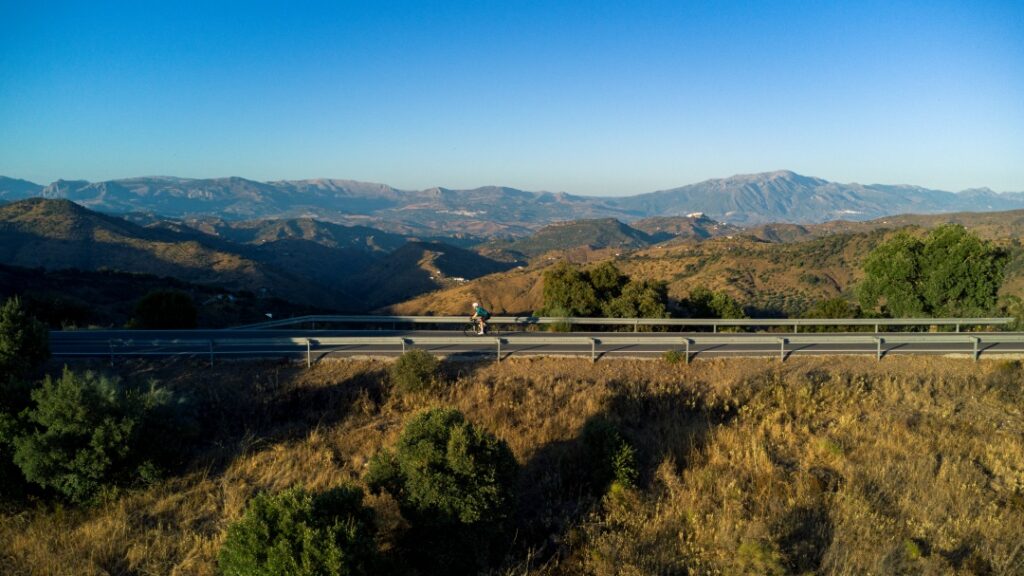
A demanding route that leaves the Mediterranean behind to explore the deepest reaches of the Axarquía. Winding roads, steep gradients and relentlessly rolling terrain connect white villages, vineyards and mountain landscapes. A route through inland Málaga that is as tough as it is spectacular.
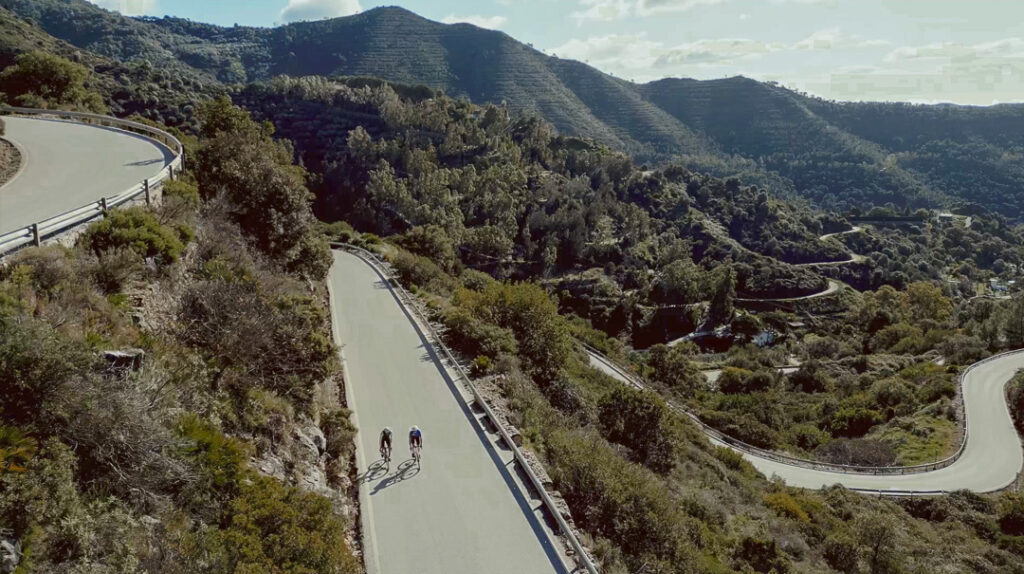
From the sunny streets of Marbella, the route enters the Sierra Blanca, ascending between gentle curves and Mediterranean pine forests. Passing through Ojén opens the door to a wilder and more mountainous environment, where the ascent to El Juanar offers silence, shade and wide views towards the coast.
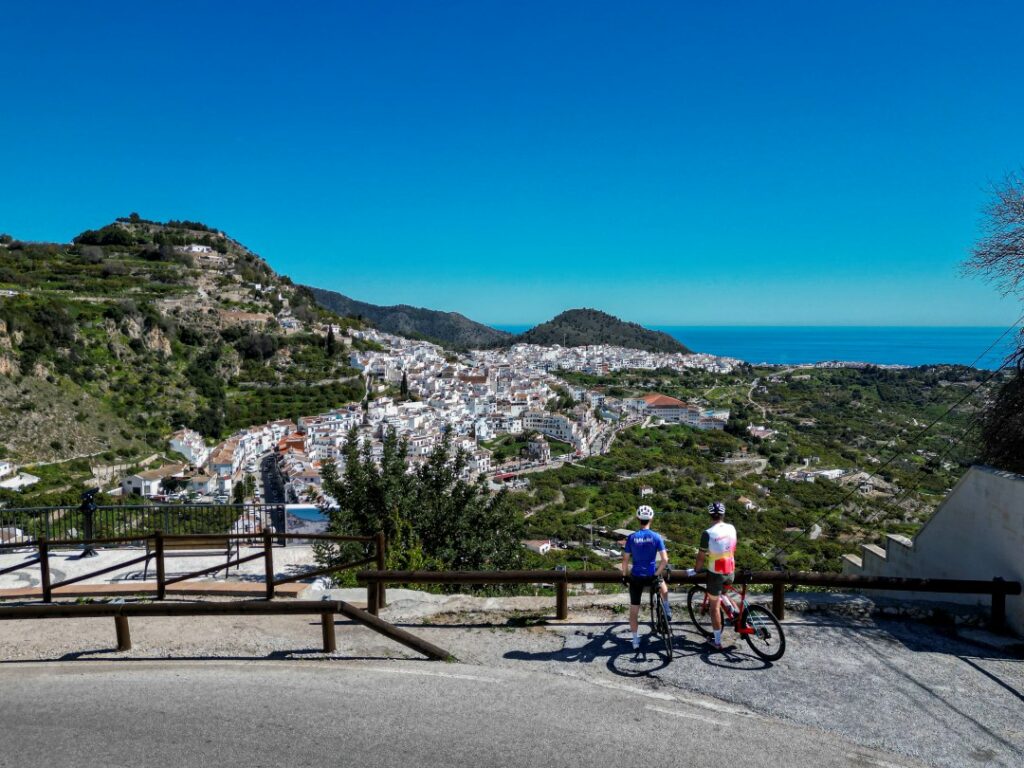
A route that has it all: starting from one of the most beautiful white villages in Andalusia, a fast stretch along the Mediterranean and a demanding loop through the Axarquía interior. Long climbs, rolling terrain that keeps the legs working and a final ascent to round off a very complete day on the bike.
"En Málaga CicloTu utilizamos cookies para que tu experiencia de navegación sea tan fluida como un paseo en bici por el centro de Málaga. Gracias a ellas, podemos optimizar tu recorrido digital, recordar tus preferencias y ofrecerte el mejor servicio. Si decides frenar y no aceptarlas, algunas funciones pueden no estar disponibles. ¿Listo para seguir pedaleando con nosotros?"